

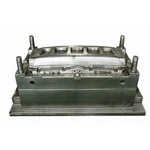




Car Lamp Mould
What Is Car Lamp Mould?
The Car lamp mould plays a vital role in illuminating vehicles, serving as the eyes of cars. It encompasses all the lighting systems employed in automobiles. The design and production of the auto lamp mould necessitate meticulous attention due to the exacting requirements of automobile light appearance. Transparent and electroplated components constitute several critical parts of these lights. The lamp itself stands out as the most demanding element in the car's aesthetic. The front and rear headlights represent the primary illumination sources for most cars. Lighting configurations of our car light mould differ across various car series, while even within the same series, variations exist based on height configuration. The key components comprising the front and rear lights of a car include left and right lenses, decorative frames, lamp housings, reflectors, among others.
Advantages of Car Lamp Mould
Providing critical and repeatable parts
Lighting molds help produce critical components such as electrical housings, engine components, and various other structural parts that are essential to the performance, safety, and overall functionality of the vehicle. It is also a highly repeatable process that provides consistent results from part to part, ensuring the production of high-performance vehicles.
Wide range of materials
Lighting molds offer a wide range of materials for various applications, from thermoplastics such as polypropylene (pp), nylon (pa), and acrylonitrile butadiene styrene (abs) to elastomeric materials such as rubber and silicone and thermoset materials such as epoxy and polyester, which are in high demand for both interior and exterior parts from oems.
Rapid prototyping with rapid tooling
Rapid prototyping with rapid tooling offers significant benefits, enabling automakers to prototype with production-ready materials, a capability that other rapid prototyping processes such as 3d printing and cnc do not offer. Typically, injection molding is the first choice for manufacturing parts such as bumpers and door panels that are produced in lower volumes but at higher quality before full production in a cost-effective manner.
Replacing heavy metal parts with overmolding
Overmolding is a process within injection molding where a substrate or preformed part is combined with other materials to create a final product. The automotive industry is increasingly turning to overmolding to replace traditional heavy metal parts with lighter, more cost-effective alternatives to improve fuel efficiency and overall vehicle performance. From automotive handles and steering wheel elements to pedals, parts traditionally made of heavy metal can now be transformed through overmolding.
Meeting aesthetic expectations
Lighting molds play a vital role in meeting the aesthetic expectations of the automotive industry. From stylish interior elements such as dashboards and trims to exterior features such as grilles and body panels, injection molding is able to create parts with smooth surfaces, intricate details, and a variety of textures such as gloss, rough or matte. Unlike other manufacturing techniques, these textures are applied directly to the mold rather than the molded part, making it a cost-effective way to produce thousands of identical, high-quality components.

Mould type: Plastic injection mould
Product Material: ABS
Cavity No.: 1cav
Runner: Hot / cold runner

Mould type: Plastic injection mould
Product Material: ABS,PP
Cavity No.: 1cav or 2cav or as request
Runner: Hot / cold runner

Mould type: Plastic injection mould
Product Material: ABS/PP
Cavity No.: 1cav
Runner: Hot / cold runner


Mould type: Plastic injection mould
Product Material: ABS/PP/PC etc
Cavity No.: 1cav
Runner: Hot / cold runner

Engine Cover And Support Mould
Mould type: Plastic injection mould
Product Material: ABS,PP,PC
Cavity No.: 1 or 2cav
Runner: Hot / cold runner

Mould type: Plastic injection mould
Product Material: ABS,PP,PC,PS
Cavity No.: As request
Runner: Hot / cold runner
Why Choose Us
One-stop solution
We provide convenient one-stop services to help customers obtain injection molding machines and spare parts, molds and spare parts, plastic raw materials and masterbatch.
Quality assurance
The company has advanced measuring equipments and apparatus such as cmm to let us know the quality situation of every product.
Wide range of cooperative countries
We have a full understanding of the export standards, transportation conditions, and requirements of the cooperative countries.
24h online service
Our customer service representatives are available 24/7 to assist you with any inquiries, technical issues, or after-sales services.
For Headlight Molds, The Main Design Points Are
Special plastic molding equipment is required, and a plastic molding machine that specializes in producing bmc plastics is required. The requirements for plastic molding equipment are very strict.
Bmc material is a special hard plastic. In the design of the injection mold, it is necessary to design a heating system and a parting surface unloading system. The molded parts must be quenched to improve wear resistance and mold life.
The car headlights use reflector plastic parts, which play the role of preventing direct light, reflecting light, and avoiding direct light. The lighting requirements are strict. Plastic parts are the most important exterior parts of cars. There are many patterns on the surface of plastic parts, which play a decorative role.
When designing bmc material injection molds, the ejector system should be balanced, and the push rod specifications should be designed as large as possible, and the number should be as large as possible, otherwise it will be difficult to demold.
If the demolding angle of high-gloss electroplated parts is too small, it will cause demolding difficulties. Therefore, the draft angle of the side wall of the mirror plastic part should be designed as large as possible, generally 5°~10° is recommended. Of course, the premise is that it does not affect the function and shape of the plastic part.
Plastic parts cannot have sharp corners, and all corners must be designed to be rounded, because plastic parts are prone to stress cracking after quenching.
Note that the left and right mirror lamp holder holes and plastic part surfaces are translated left and right, and cannot be designed to be mirror symmetrical, because the bulb and lamp holder are not divided into left and right, and other features are mirror symmetrical.
Types of Car Lamp Mould
Injection mold
Injection mold is also called injection mold. The molding process of this mold is characterized in that the plastic raw materials are placed in the heating barrel of the injection machine. The plastic is heated and melted. Driven by the screw or plunger of the injection machine, it enters the mold cavity through the nozzle and the pouring system of the mold. The plastic is solidified and formed in the mold cavity through heat preservation, pressure holding, and cooling. Because the heating and pressurizing device can play a role in stages, injection molding can not only form plastic parts with complex shapes but also have high production efficiency and good quality. Therefore, injection molding occupies a large proportion of the molding of plastic parts, and the injection mold accounts for more than half of the plastic molding mold. The injection machine is mainly used for the molding of thermoplastics and has gradually been used for the molding of thermosetting plastics in recent years.
Compression mold
Compression die is also called pressing die or glue pressing die. The molding process of this mold is characterized in that the plastic raw materials are directly added into the open mold cavity, and then the mold is closed. After the plastic is in a molten state under the action of heat and pressure, the mold cavity is filled with a certain pressure. At this time, the molecular structure of the plastic produced a chemical cross-linking reaction and gradually hardened and shaped. Compression molds are mostly used for thermosetting plastics, and their molded plastic parts are mostly used for the shell of electrical switches and daily necessities.
Transfer mold
Transfer mold is also called pressure injection mold or extrusion mold. The molding process of this mold is characterized in that the plastic raw materials are added to the preheated feeding chamber, and then the pressure is applied to the plastic raw materials in the feeding chamber by the pressure column. The plastic melts under high temperature and high pressure and enters the cavity through the pouring system of the mold, and then the chemical crosslinking reaction occurs and gradually solidifies and forms. The transfer molding process is mostly used for thermosetting plastics, which can form plastic parts with complex shapes.
Extrusion mold
The extrusion die is also known as the extruder head. The die can continuously produce plastics with the same section shape, such as plastic pipe, bar, sheet, etc. The heating and pressurizing device of the extruder is the same as that of the injection machine. The molten plastic will form continuous molded plastic parts through the machine head, and the production efficiency is particularly high.
Front headlights
The front headlights are one of the most prominent components of a car, so there is a high demand for molds. When designing the decorative frame mold for car headlights, attention should be paid to the following points:Electroplated parts should first avoid welding lines, as any welding lines in the electroplated parts will appear and affect the appearance of the plastic parts. When designing the pouring system, welding lines should be avoided. If welding lines are unavoidable, efforts should be made to drive them to non appearance areas. Before designing the pouring system, it should be verified through mold flow analysis. High quality headlight molds can improve the appearance and grade of a car.
Turn signal
Turn signal is an important component of automotive safety, therefore it must have high accuracy and lifespan. High quality turn signal molds can improve production efficiency and reduce costs.
Taillights
Taillights are one of the important components inside cars, and the requirements for molds are relatively low. However, high-quality tail light molds can improve production efficiency and reduce scrap rates.
Plastic car lamp molds play an important role in automobile production, with high precision, long service life, and high safety. In order to meet market demand, we must continuously improve the design and manufacturing level of molds, improve production efficiency, reduce costs, and provide customers with better products and services. In the future, with the continuous development of the automotive industry, the application of automotive lamp molds will become more common, and the market prospects will be broad.
Materials Used in Headlight Mold Forming
A variety of polymers are used in headlight mold forming to meet the different needs of different parts. Common materials include:
Polypropylene (pp)
Lightweight and with excellent chemical resistance, pp is often used for interior parts and under-the-hood components.
Polyethylene (pe)
Pe is known for its high impact strength and flexibility, making it an ideal choice for applications such as fuel tanks and reservoirs.
Acrylonitrile butadiene styrene (abs)
Abs is valued for its toughness and heat resistance and is often used for exterior and interior panels.
Nylon
Nylon has excellent strength and durability and is often used for high-performance parts such as gears and bearings.
Polycarbonate (pc)
Pc is praised for its optical clarity and impact resistance, making it a top choice for headlight lenses and instrument panels.
By selecting materials based on mechanical properties, chemical resistance, and aesthetics, automakers can ensure that automotive part molds meet the stringent requirements of vehicle design and performance.
What Are the Requirements for the Production and Processing of Car Lamp Mould?
The production and processing of car lamp mould must select the appropriate type and grade of materials to meet the quality standards and improve the performance at the same time, so that the quality of the production molds can meet the standards. Car lamp mould need to use high-strength, high-hardness and high-toughness materials to ensure the service life and stability of the molds. Commonly used materials include high-speed steel, cemented carbide, etc., and appropriate materials need to be selected according to the use and requirements of the molds. Only by selecting suitable materials for production and processing can the quality advantages be fully utilized.
The production and processing of car lamp mould must clarify the processing accuracy. Only by meeting the processing accuracy requirements can the production quality of car lamp mould be more guaranteed. Processing accuracy requirements are one of the key elements in the production and processing of car lamp mould. Processing accuracy requirements include dimensional accuracy, shape accuracy, position accuracy and surface accuracy. Only by ensuring that the processing accuracy meets the standards can the overall shape of the mold be more perfect, which will be a good guarantee for the mass production of headlights.
The surface treatment of headlight mold production and processing is to ensure the surface quality and corrosion resistance of the mold. Surface treatment methods include electroplating, spraying, sandblasting and other methods. Appropriate methods need to be selected according to mold requirements and material characteristics. In order to ensure that the entire process meets professional standards, it is recommended to cooperate with kaidi mold manufacturing technology co., ltd. For design and customized production. It not only provides personalized solutions, but also has very guaranteed services and reasonable prices, which are recognized and praised by customers.
Heat treatment of car lamp mold production and processing is to improve the hardness, strength and wear resistance of the mold. Heat treatment methods include quenching, tempering and other methods. According to actual needs and material characteristics, the corresponding method should be selected for heat treatment. This will not only ensure that the quality is more reliable and safe, but also achieve better results in detail processing, and the overall shape of the car lamp mold will be more perfect. In order to meet high standards, every detail of the production and processing process must be carefully processed.
The production and processing of car lamp molds must be reasonably tested. Only after testing can it be determined whether it meets the production standards. If it is not tested, it is easy to affect the quality and processing requirements of the car lamp. Testing is to ensure the quality and precision of the mold. Inspection requires the use of various precision instruments and equipment to inspect and test all aspects of the mold, including size, shape, position, surface roughness and other aspects.
Process of Car Lamp Mould
Design stage
According to the model and market demand, the designer will use cad software to design the three-dimensional model of the car light.
Perform optical simulation analysis and thermal simulation to ensure that the function and performance of the car light meet the requirements.
Mold manufacturing
The mold is a key tool for car light production and is manufactured according to design requirements and samples.
Mold manufacturing requires professional equipment and technology, and the operator is usually a specially trained craftsman.
Raw material preparation
The main materials of car light hardware include metals (such as aluminum alloys, zinc alloys), plastics, etc.
Raw materials need to be purchased from suppliers and undergo strict quality inspection and warehousing management.
Parts manufacturing
Metal materials are processed into the housing and bracket of the lamp through processes such as stamping and casting.
Plastic materials are manufactured into the lens and housing of the lamp through processes such as injection molding and extrusion.
Electronic components are assembled through processes such as patching and welding.
Injection molding
Molten plastic material is injected into the mold and formed into the desired shape through high pressure and temperature.
The commonly used material is polycarbonate (pc), and the flow rate and temperature of the injected material must be controlled to ensure the molding quality.
Electroplating
In order to increase the brightness and corrosion resistance of the car light, the car light is electroplated.
During the electroplating process, the car light is placed in a tank containing a metal salt solution, and the metal is deposited on the surface of the car light through an electrolytic reaction.
Assembly
The car light parts that have been injection molded and electroplated are assembled to form the final product.
The assembly process includes installing bulbs, reflectors, lenses, etc., which must be strictly operated in accordance with design requirements and standards.
Quality inspection
The assembled car light is quality inspected and functionally tested to ensure that it meets the design requirements and relevant standards.
Company Introduction
Originated from Huangyan Taizhou, a famous town for all kinds of plastic moulds making (Here we call Chinese's mould town), Sunjoy plastic and mould center department has built up a strong supply chain for all kinds of different plastic moulds, such as auto parts moulds, household item moulds, electric appliance moulds, industrial moulds, pipe fitting moulds, etc.

FAQ
Hot Tags: car lamp mould, China car lamp mould manufacturers, suppliers, factory, Table and Desk Board Mould, Plastic Pallet Mould, Furniture Mould, Mop Mould, Fan Mould, Plate Rack Mould
Previous
Vehicle Parts MouldNext
Car Bumper MouldYou Might Also Like


Send Inquiry